Knowing how to move a fridge freezer properly saves you from soggy carpets, a smelly van and, at worst, a broken appliance. Most of the work happens before moving day. You run the food down, defrost the freezer, drain and dry it, and pack the loose parts. On the day it travels upright, and at the new house it stands for a while before you plug it in. Below is the full routine, with notes on the stone steps, narrow hallways and tight terraced streets that make many Bradford moves a little more fiddly.
Run the food down first
Start about a week before you move. Plan meals around what is already in the freezer and stop doing big shops. Frozen food will not survive a long day in a van, and a full freezer takes much longer to defrost.
A few tips:
- Use up open jars, sauces and milk in the last few days.
- Give unopened food to neighbours, friends or a local food bank if you will not use it in time.
- Keep a cool bag with ice packs for anything you need on the day itself, such as milk for tea and baby food.
- If you are moving across Bradford, for example from Heaton to Eccleshill, a cool box will easily keep a few essentials cold for the morning.
How to move a fridge freezer: the step-by-step prep
1. Switch off and defrost
Turn the appliance off at the wall and unplug it at least 24 hours before the move. The evening before is the latest it should be done. Take everything out, including the shelves and drawers, and leave both doors open.
Put towels on the floor and a tray or baking dish at the bottom of the freezer to catch meltwater. Never chip at the ice with a knife or anything sharp, as you can puncture the cooling pipes. If you want to speed things up, a bowl of warm water placed inside and the door closed for a while will help. Keep hairdryers and heaters away from the plastic lining.
2. Drain the water
Many fridge freezers have a drain hole at the back of the fridge section that feeds a tray on top of the compressor. Check that tray once the ice has gone. Some models have a drain plug or tray at the bottom front. Your manual will show where yours is. Empty it, wipe it and put it back.
3. Clean and dry it fully
Wash the inside with warm water and a little washing-up liquid or bicarbonate of soda. Then dry every surface with a clean cloth. Leave the doors open for an hour or two so any remaining damp can air out. Any water left inside will slosh around in transit and leak onto other furniture.
4. Pack the loose parts
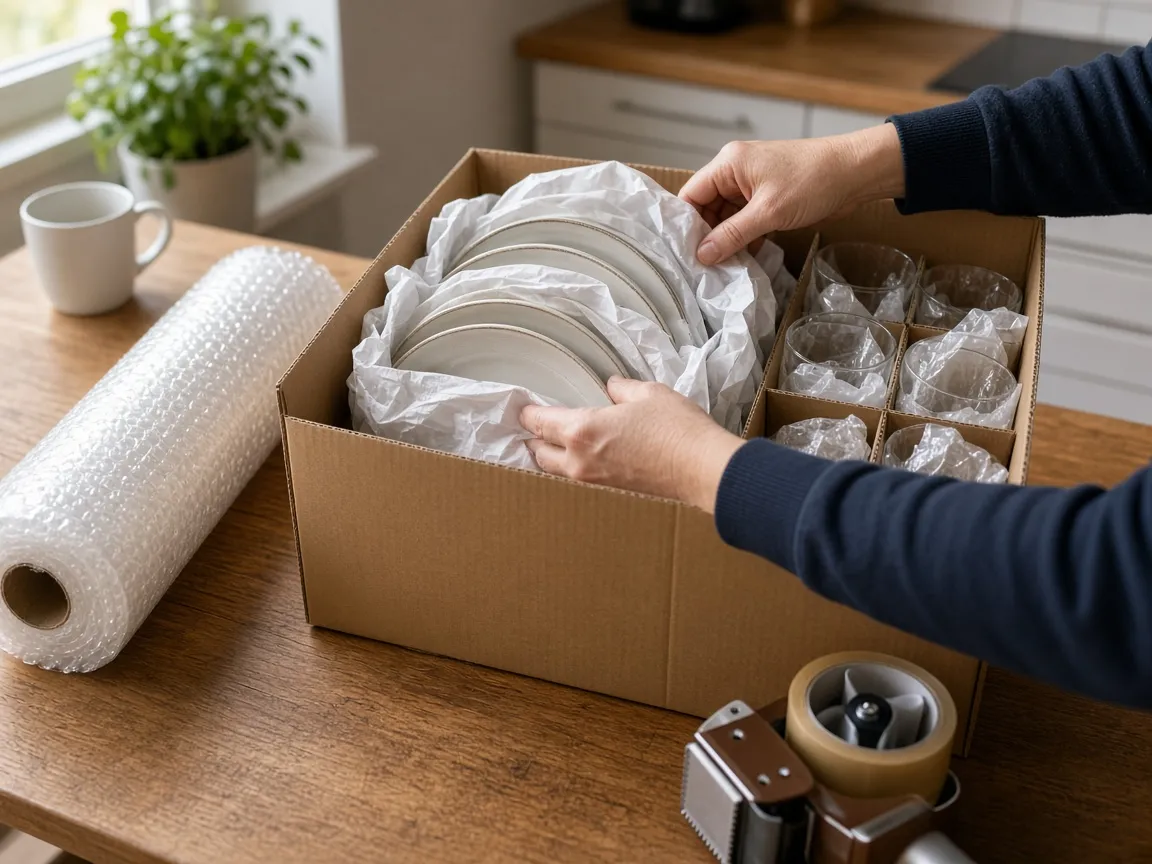
Glass shelves are the parts most likely to break. Wrap them in towels or bubble wrap and pack them flat in a box, or tape them firmly in place inside the fridge if they cannot rattle. Tape drawers shut so they do not slide out. Put small fittings such as egg trays and bottle holders in a labelled bag.
5. Secure the doors and cable
Tape the doors shut with removal tape or a strap. Avoid strong parcel tape directly on the finish, as it can leave marks. Coil the power cable and tape it to the back so nobody trips on it or catches it on a door frame.
6. Disconnect plumbed models
American-style fridge freezers with a water dispenser or ice maker are connected to the water supply. Turn off the isolation valve, disconnect the hose and drain any water in the line. Empty the ice tray. If you are not sure how to do this, ask a plumber before moving day.
On moving day: keep it upright
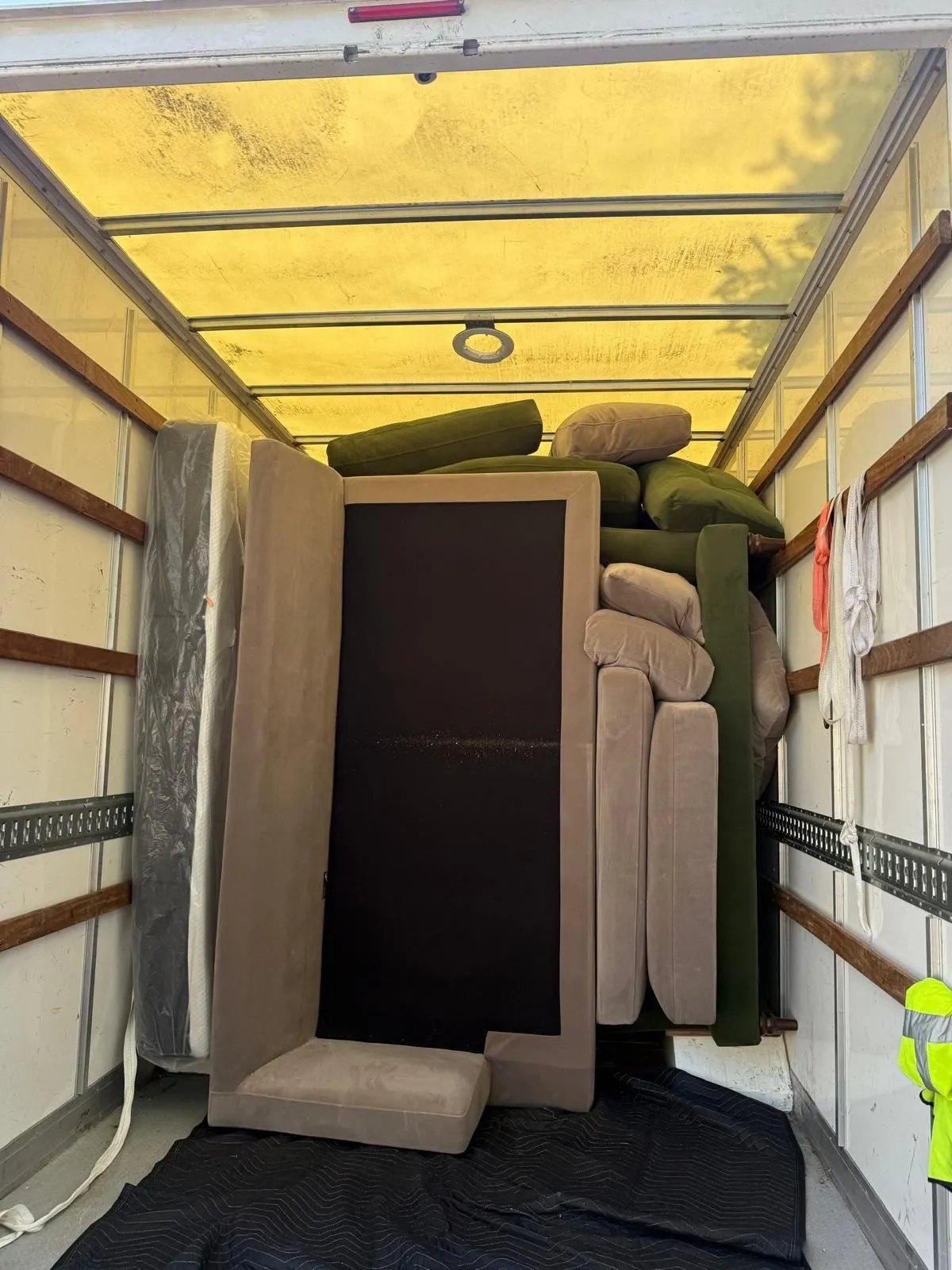
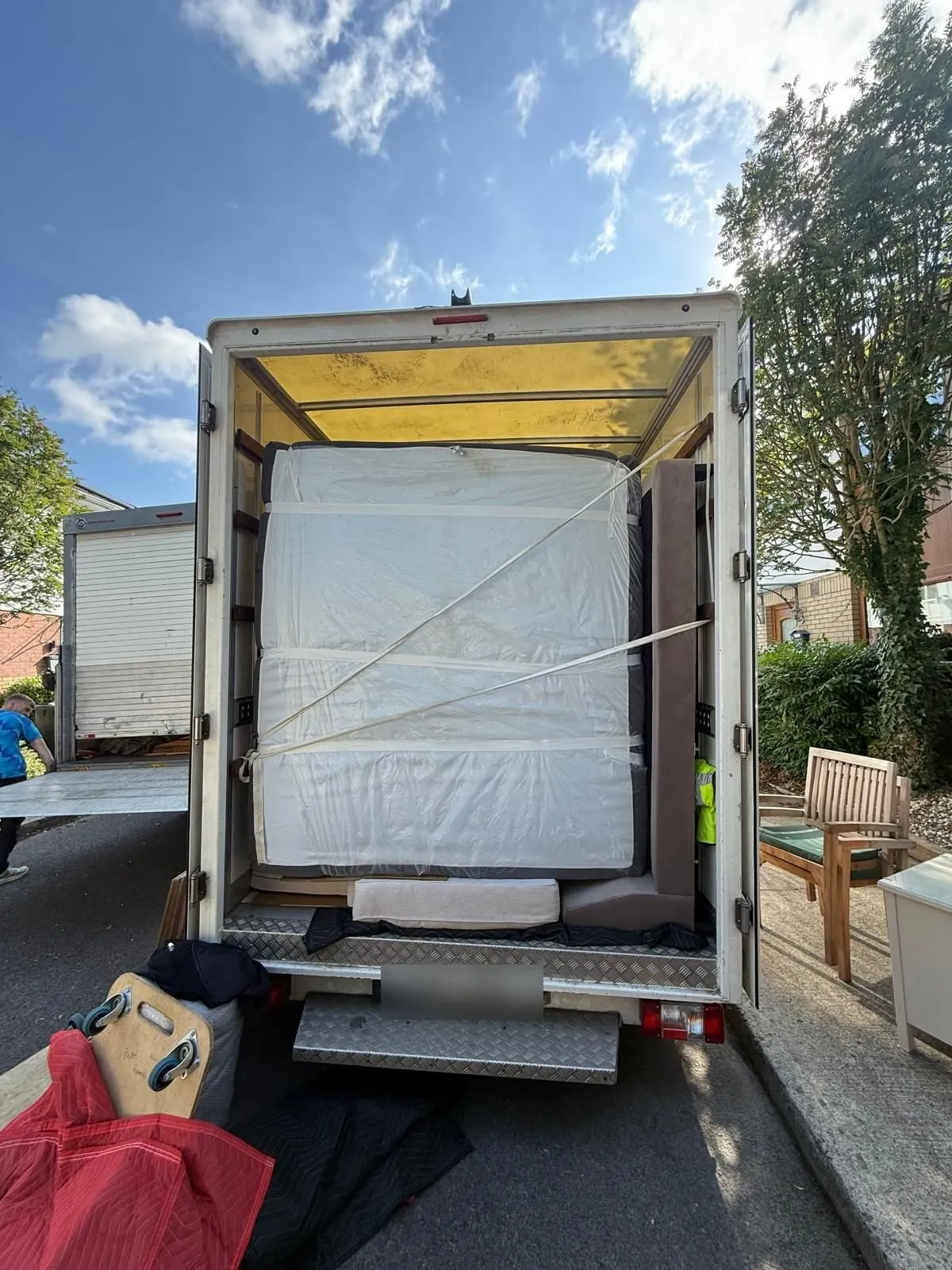
A fridge freezer should travel standing up. The compressor at the back contains oil, and if the unit is laid down that oil can run into the cooling pipes. That is why most advice says to keep it upright, and why a decent removal team will strap it upright against the side of the van.
If it does have to be tilted, for example to get it round a tight turn on a staircase, keep the tilt short and gentle. Lean it on the side rather than the back where the pipes and grille are.
Other things that help:
- Clear a path from the kitchen to the front door before the crew arrives.
- Measure the doorways, the hall and the van access in advance. Big American models often need doors taken off their hinges.
- Protect floors with old sheets or cardboard.
- Load it last if you need to unload it first.
Bradford homes: stairs, steps and tight corners
Bradford housing throws up a few challenges. Many stone terraces in areas like Manningham, Great Horton and Girlington have a run of steep steps up to the front door. Back-to-backs often have tight, narrow stairs and small kitchens. Some streets are cobbled, and many are lined with parked cars, so the van may have to stop a short distance from the door.
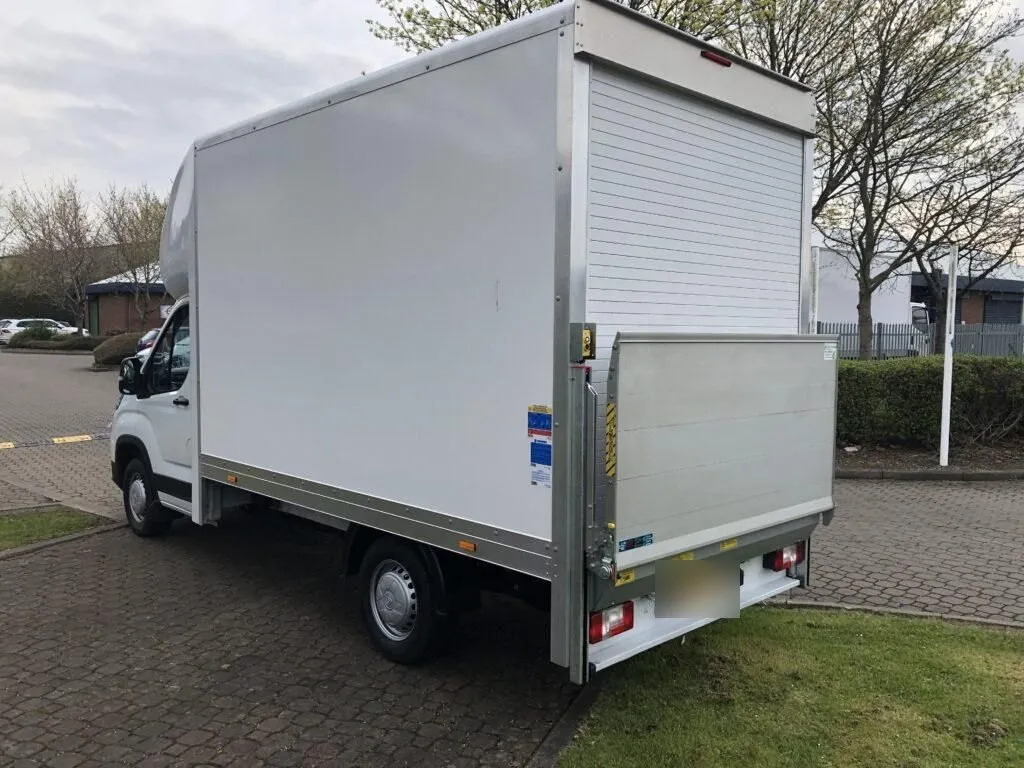
These details matter for heavy appliances. A large fridge freezer may be easier to take out through a back door into a back street than through a narrow front hallway. If your new home is a flat, check whether there is a lift and how big it is. If you tell your removal company about steps, slopes or parking problems when you ask for a quote, they can plan the right number of people and equipment.
At the new home: let it settle
Once it is in place, resist the urge to switch it on straight away. The oil and refrigerant need time to settle back where they belong.
General guidance is to wait a few hours if it travelled upright the whole way, and longer if it was tilted or laid down. Some manufacturers say a few hours is enough, others recommend waiting longer. Check the manufacturer’s manual for your model, as that is the advice that counts. If you have lost the paper copy, most brands put manuals online under the model number, which is usually on a sticker inside the fridge.
When you do switch it on:
- Leave a gap at the back and sides for air to flow, as the manual shows.
- Make sure it stands level. Adjust the front feet if the doors swing open or shut on their own.
- Let it reach temperature before you load it. This often takes several hours.
- Put a thermometer inside if you want to be sure it is cold enough before you fill it.
When to let a removal team do it
A fridge freezer is heavy, awkward and easy to scratch or dent. Carrying one down terrace steps or round a tight landing is a two or three person job. If you are booking a full house move, it simply goes on the van with everything else. If you need appliances moved with other furniture, our furniture removals or man and van services are the right place to start.
Fridges are also one of the things to think about if you are putting belongings into storage. Our guide to preparing items for storage covers how to leave one so it does not grow mould while it waits. For the rest of the kitchen, the washing machine guide follows a similar routine.
If you would like the crew to handle the lifting, send us your details through the free quote form or call 08000862860 and tell us about any steps, stairs or parking issues at both ends.
Planning a move in Bradford?
Get a free, no-obligation quote, or try the cost calculator for a rough idea first.
Areas mentioned