
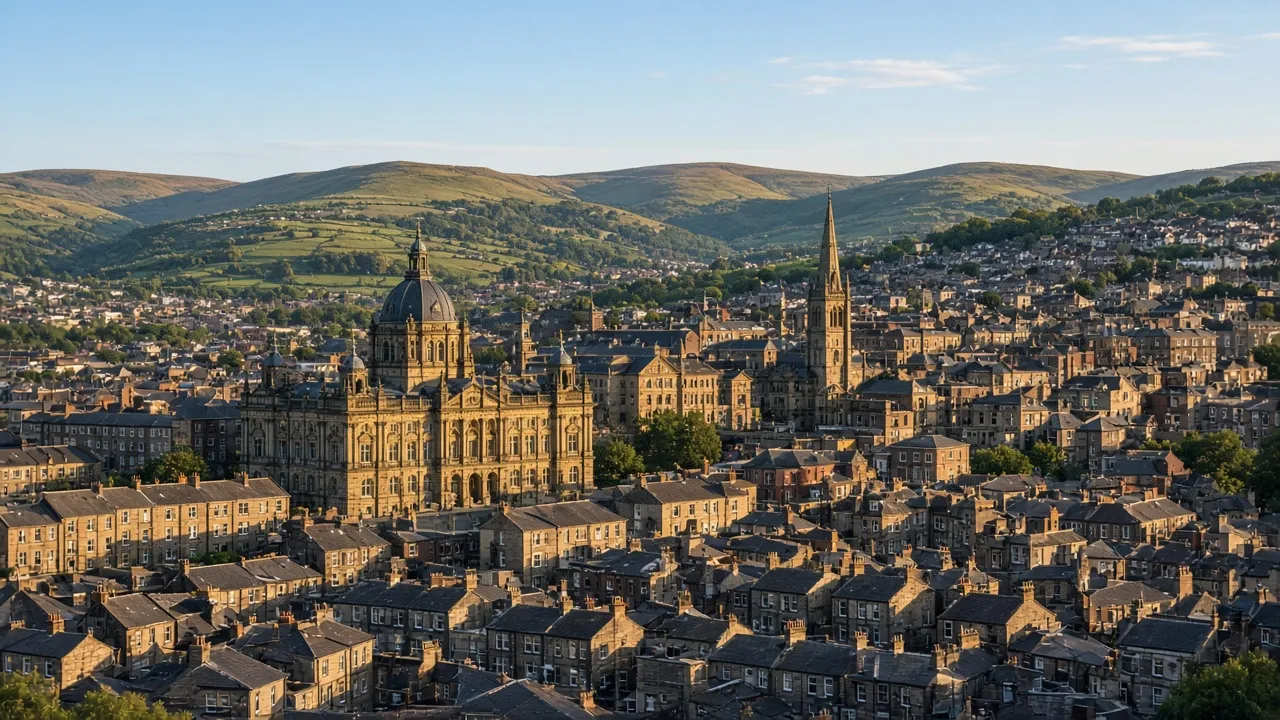
Picking where to live in Bradford is mostly about three things: the type of home you want, how you will get to work or school, and how much hill you are happy to climb. The district runs from city centre flats to stone villages on the moor edge, and each part feels different. This guide groups the main neighbourhoods by what they offer, with the practical moving details we notice as a removal crew.
For a wider look at the city itself, see our guide to Bradford. This page is about choosing a neighbourhood.
Start with what matters to you
Before you look at areas, write down your short list of needs:
- Home type. Flat, terrace, semi, detached or bungalow.
- Travel. Train, bus, car or walking, and where to.
- Schools. Check catchment areas with the council before you commit.
- Space. Do you need a garden, off-street parking or a spare room?
- Ground. Bradford sits in a bowl of hills. Some streets are very steep, which matters with a pushchair, a wheelchair or bins.
Then match those needs to the areas below.
City centre and close-in areas
Bradford city centre
The city centre suits people who want to walk to work, the stations and the shops. Housing is mostly flats, including converted warehouses in Little Germany and newer apartment blocks. Forster Square and the Interchange stations are close, and City Park, the Alhambra Theatre and the National Science and Media Museum are all on the doorstep. Parking is the main trade-off. Many flats have limited spaces, and moving day needs planning around loading and permits.
Manningham and Girlington
Manningham has some of the city’s grandest Victorian stone houses, alongside long rows of terraces. Lister Park and Cartwright Hall are here, and Valley Parade is just off Manningham Lane. Girlington, to the west, is mainly terraced streets close to Thornton Road. Both are near the centre and well served by buses. Terraced streets are often narrow with cars on both sides.
Great Horton
Great Horton sits along Great Horton Road, close to the University of Bradford and Bradford College. It has plenty of terraced housing and is popular with students and staff, as well as families who have lived there for generations.
The leafy north-west
Heaton and Frizinghall
Heaton is known for larger stone houses, tree-lined roads and easy access to Lister Park and Heaton Woods. It is one of the more sought-after parts of the city for families. Frizinghall sits between Heaton and Shipley, with its own railway station on the line to Shipley and Forster Square. Both areas have a mix of terraces, semis and bigger detached homes, and some steep roads.
The Aire Valley: Shipley, Saltaire and Baildon
Shipley
Shipley is a town in its own right, with a station that links to Leeds, Bradford and the Aire Valley line. Housing ranges from terraces near the centre to semis on the hillsides. It is a practical choice for commuters.
Saltaire
Saltaire is a UNESCO World Heritage Site, built as a model village around Salts Mill. Its stone terraces are much loved, and Roberts Park and the canal are close by. Streets are narrow and parking is tight, so moves here need careful timing.
Baildon
Baildon sits on the hill above Shipley, next to Baildon Moor. It feels more like a village, with a mix of older stone cottages and newer estates. Expect hills, but also views.
North-east villages: Idle, Thackley and Eccleshill
Idle and Thackley have kept their village centres, with stone cottages, terraces and newer housing around them. Apperley Bridge station is nearby, and the Leeds and Liverpool Canal runs along the valley below. Eccleshill is closer to the city, with a mix of terraces and semis. All three are handy for people who travel towards Leeds.
West and the hilltop villages
Allerton, Thornton, Clayton and Queensbury
To the west, the land rises towards the moors. Allerton has a mix of semis and estates on the edge of open country. Thornton is a stone village where the Brontë sisters were born, with steep streets and older cottages. Clayton sits between them, and Queensbury is one of the highest villages in England, so winter weather is worth thinking about. These areas suit people who want more space and countryside on the doorstep, with a longer trip into the centre.
The south: Wibsey, Low Moor and Wyke
Wibsey has a strong local centre and Wibsey Park, with Odsal Stadium nearby. Low Moor has its own railway station, and Wyke sits close to the M606 and the M62 at junction 26. This side of the city is a good fit for anyone who drives to Leeds, Huddersfield or Manchester.
East: Laisterdyke
Laisterdyke sits off Leeds Road on the east side of the city. It is mostly terraced housing, close to the routes towards Pudsey and Leeds.
Moving tips once you have chosen
- Visit at different times. Walk the street at school run time and in the evening to see traffic and parking.
- Check the access. Note steps up to the door, stair widths and whether a van can stop outside.
- Measure big furniture. Older terraces often have narrow doors and tight stairs.
- Ask about parking permits. Some streets are in residents’ schemes.
Once you have found the right street, our house removals team can plan the move around its access and parking. Tell us both addresses through the free quote form or call 08000862860.
Planning a move in Bradford?
Get a free, no-obligation quote, or try the cost calculator for a rough idea first.