The right boxes and accessories make an office move faster and safer. The wrong ones split, crush or get mixed up. This guide lists what an office move usually needs, what each item is for, and roughly how much to order. For home moves, the guide to buying removal boxes and kits covers the domestic side.
Boxes
Archive boxes
Small, strong boxes sized for files and paper. Paper is heavy, so small boxes keep each one liftable. Use these for files, books, binders and anything from filing cabinets.
Medium boxes
For desk drawer contents, stationery, desk lamps and personal items. Most staff can pack a desk into a few of these.
Large boxes
For light, bulky items only: cushions, kitchen roll, soft furnishings, empty trays. Never fill a large box with paper.
Plastic crates
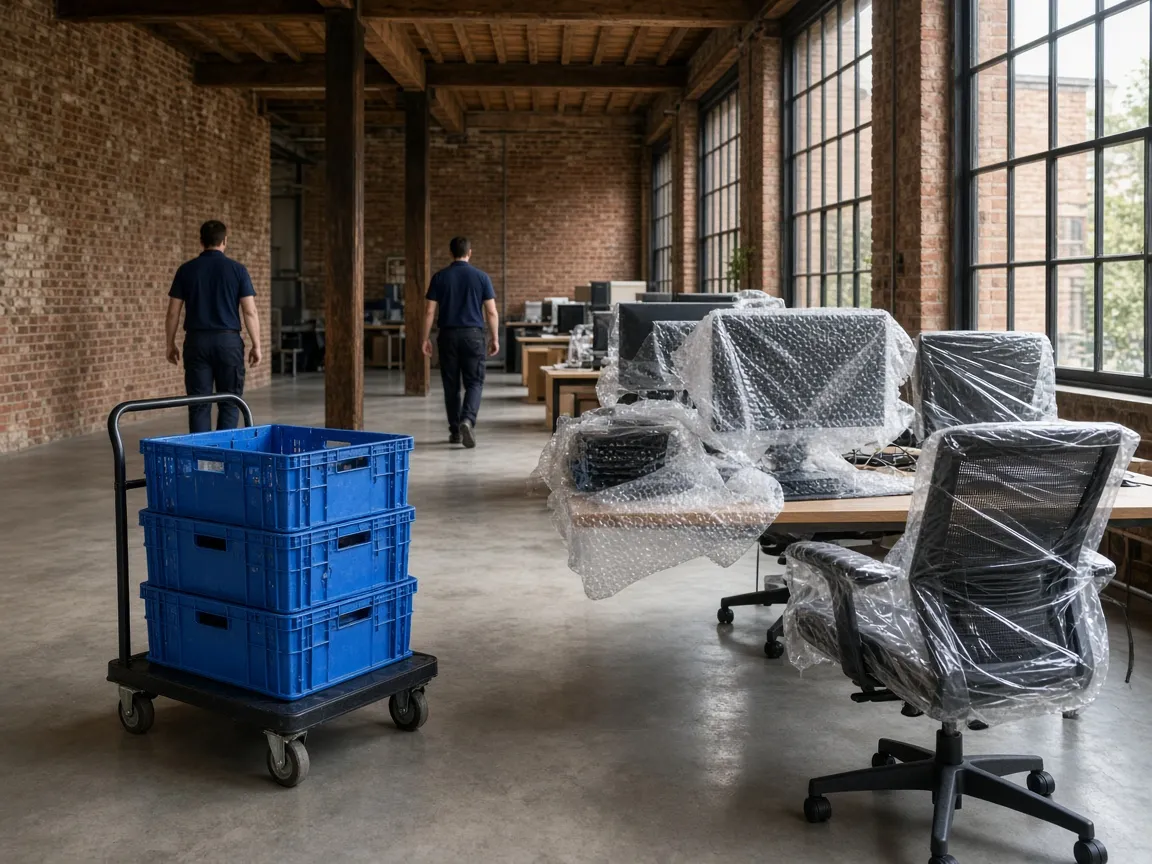
Lidded crates stack evenly, do not need tape and protect contents from knocks and rain. They suit files, IT kit and anything you want sealed. They are often hired for the move and collected afterwards.
Packing for IT and equipment
- Monitor covers or sleeves: padded covers for screens, or wrap them in bubble wrap with card over the screen.
- Anti-static bags: for loose hard drives, graphics cards or small components.
- Cable bags: small sealable bags so each computer’s cables travel with it. Label each bag with the user and desk number.
- Original boxes: if you still have them for printers, projectors or screens, use them.
Protective materials
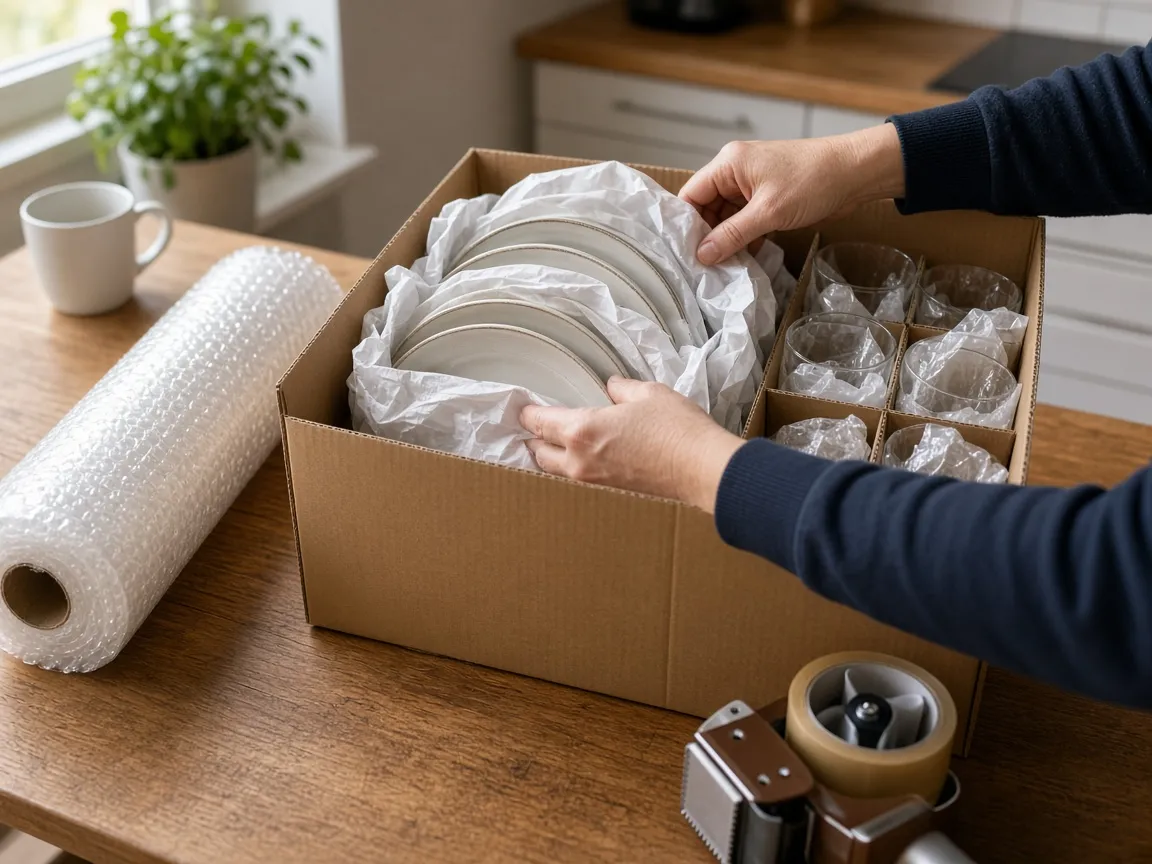
- Packing paper: fills gaps and wraps mugs, frames and small fragile items without leaving ink on them.
- Bubble wrap: for screens, glass, framed pictures and awards.
- Furniture blankets and covers: the crew normally brings these for desks, cabinets and chairs. Check this is included.
- Stretch wrap: holds drawers closed and keeps doors from swinging open in transit.
- Floor and door protection: corner guards, floor runners and lift padding. Many office buildings, especially older stone buildings in Little Germany and around the city centre, ask for these to protect their common areas.
Tape, labels and markers
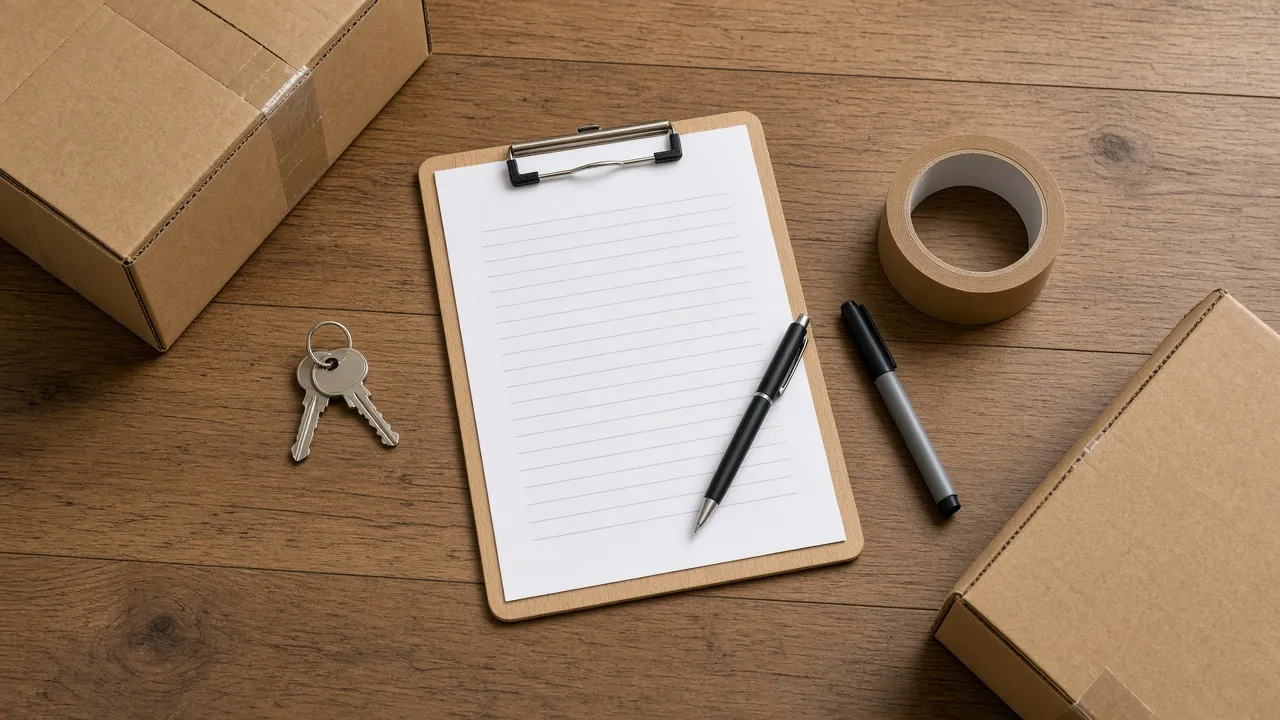
- Good parcel tape and tape guns: cheap tape lets go under load. Two strips on the top and bottom of each box.
- Coloured labels: one colour per floor or department.
- Desk number labels: matched to the new floor plan, for boxes, desks and chairs.
- Thick marker pens: one per desk or team.
- “Fragile” and “Open first” labels: for screens, kitchen items and the set-up box for each department.
The labelling system matters more than any single box. See the office moving instructions for a brief you can give staff.
Moving equipment
The crew brings handling equipment such as sack trucks, dollies and furniture skates. If your building has steps at the entrance, narrow corridors or a small lift, say so when you ask for a quote so the right kit comes along.
How much to order
A rough way to plan:
- Count desks and give each a set number of small and medium boxes, adjusted for how much paper each person keeps.
- Count shelves and filing cabinet drawers. Each full drawer usually needs one to two archive boxes.
- Add crates or boxes for each shared area: kitchen, meeting rooms, stationery cupboard, reception.
- Add a spare stock of around one in ten for things nobody counted.
It is better to have spare boxes than to run out the evening before the move.
Ordering and returns
Order boxes one to two weeks ahead so staff can start packing archive material early. Keep flat boxes in one place, not under desks. After the move, flatten everything and stack it for collection or recycling.
Bradford Removal Service can supply boxes and materials, and our packing service can pack the whole office for you. Ask for both as part of an office removal quote. When you know your desk count, get a free quote or call 08000862860.
Planning a move in Bradford?
Get a free, no-obligation quote, or try the cost calculator for a rough idea first.