If you are working out how to move a piano, the short answer is: carefully, with the right kit and enough people. Pianos are heavy, top-heavy and full of delicate parts, and they rarely sit somewhere easy to reach. This guide explains what a piano move involves, how Bradford homes affect the job, and how to pack the rest of your instruments so they arrive in playing condition.
Why pianos are harder to move than they look
A piano looks solid, and in one sense it is. Inside the case sits a cast iron frame holding the strings under huge tension. That frame accounts for much of the weight. Many upright pianos weigh well over 150 kg, and grand pianos weigh considerably more.
The weight is also badly placed. Uprights are tall and narrow with most of the mass high up and towards the back, so they can tip if they are pushed or tilted the wrong way. The legs and front panels are often the weakest parts, and the small castors on older pianos are not designed to roll a piano across a room, let alone down a path.
Then there is the inside. Hammers, dampers, keys and the soundboard are all sensitive to knocks, damp and sudden changes in temperature. A careless move can mean more than a scratch.
How to move a piano: what the job involves
Upright pianos
A typical upright piano move follows a set pattern:
- Measure the route. Doorways, hall width, stair turns and the gap between the front door and the van all get checked.
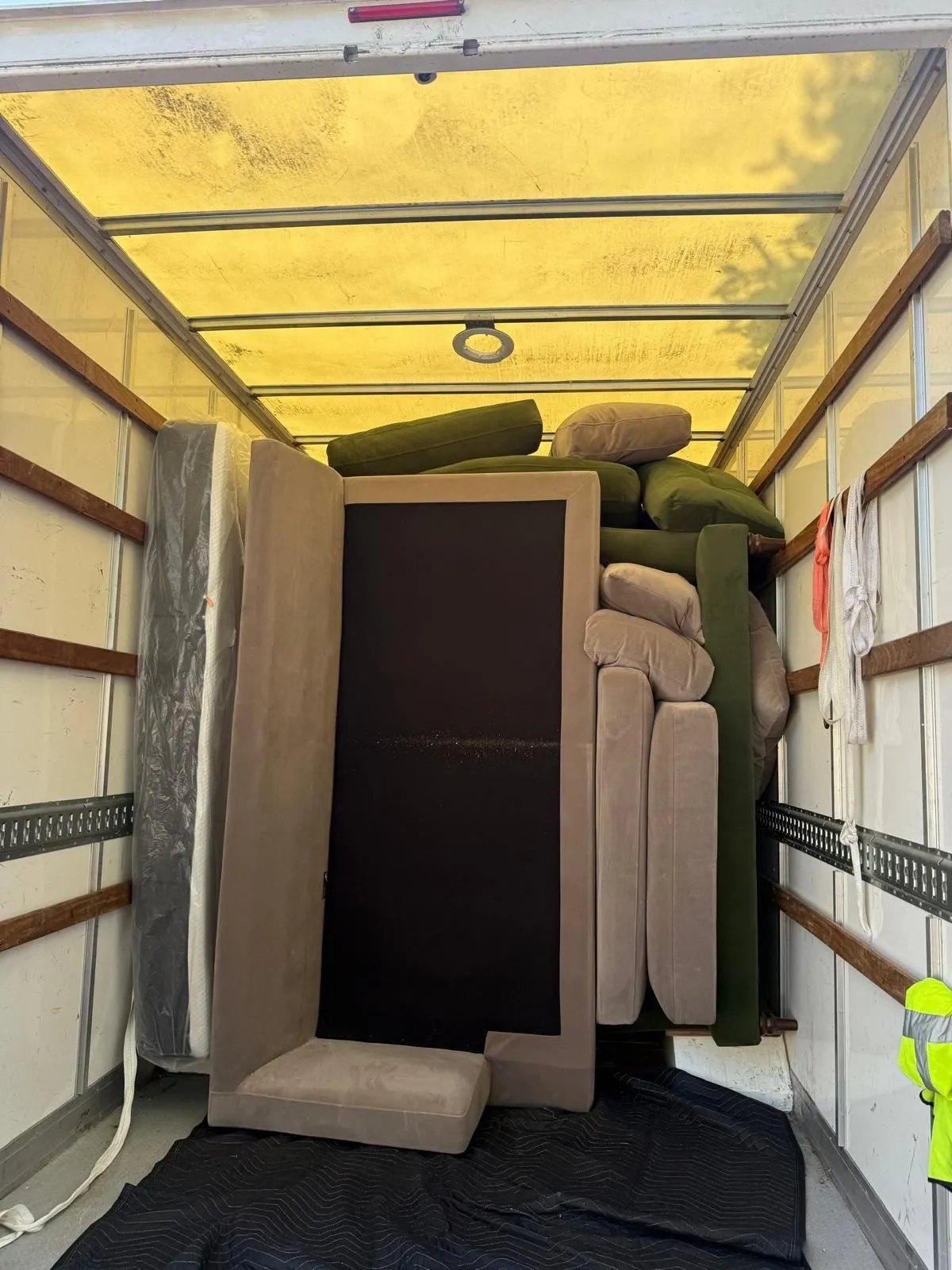
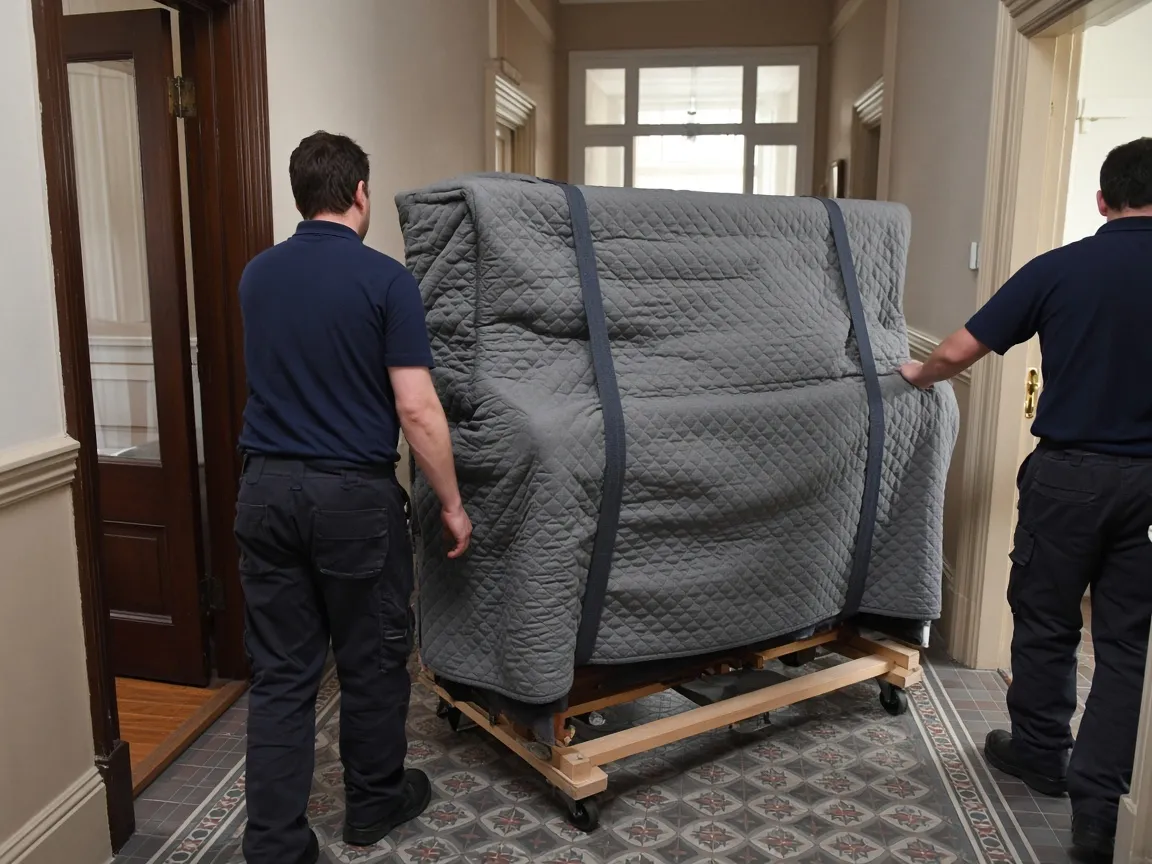
- Protect the piano. The lid is closed and secured, and the whole case is wrapped in thick padded blankets held with straps or tape that does not touch the finish.
- Use a piano trolley. The piano is lifted onto a sturdy dolly, never rolled on its own castors.
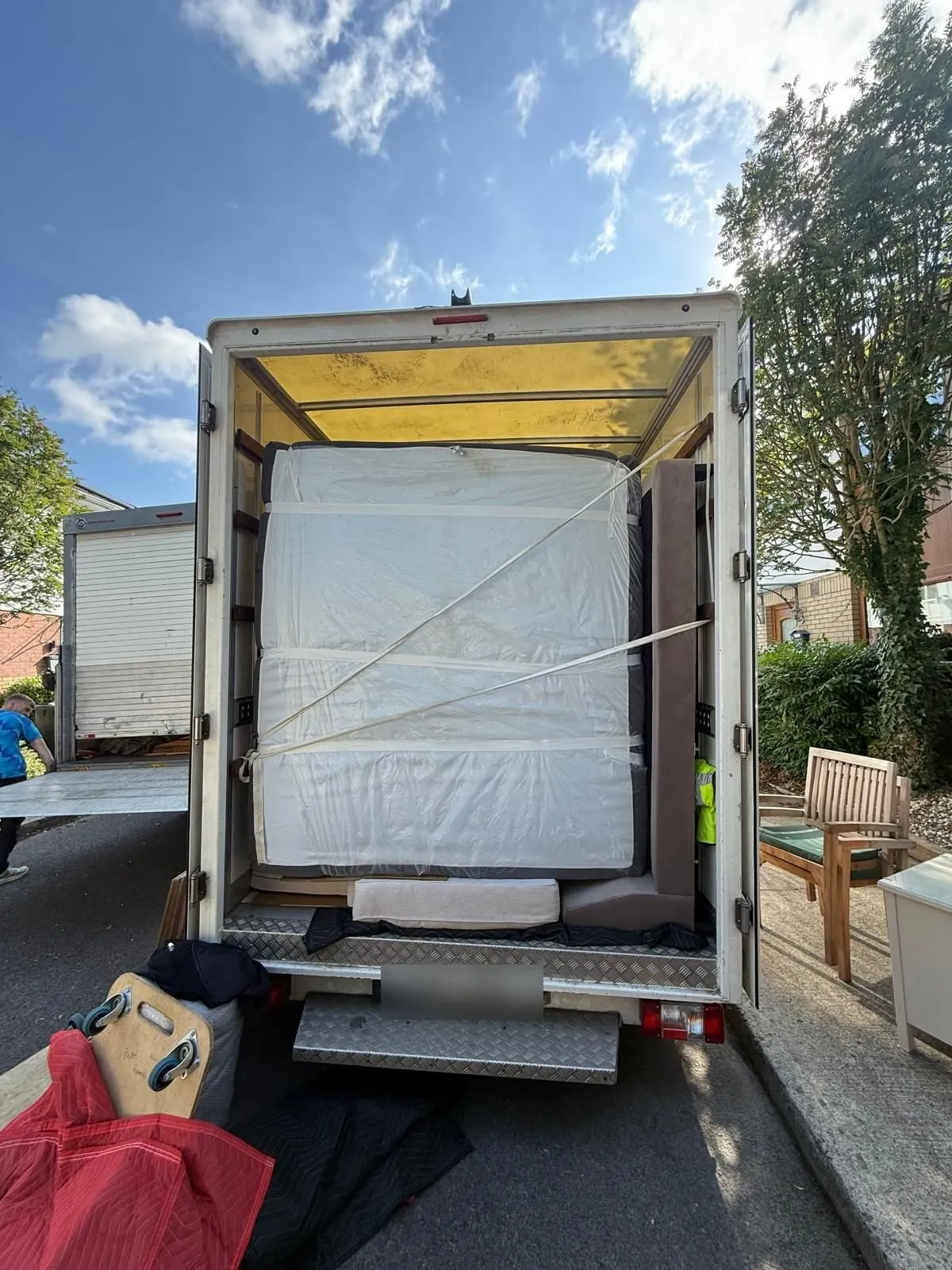
- Keep it upright. It is moved standing up and strapped to the side wall of the van so it cannot shift.
- Take steps slowly. On stairs or front steps the crew uses a board, straps and enough hands to control the weight on every step.
Grand and baby grand pianos
Grands need more preparation. The lid is removed or secured, the pedal lyre and legs are taken off, and the body is turned onto its long, straight side and strapped to a padded piano board. It then travels on its side. This takes skill, which is why grand piano moves are a job for people who do them regularly.
Digital pianos and keyboards
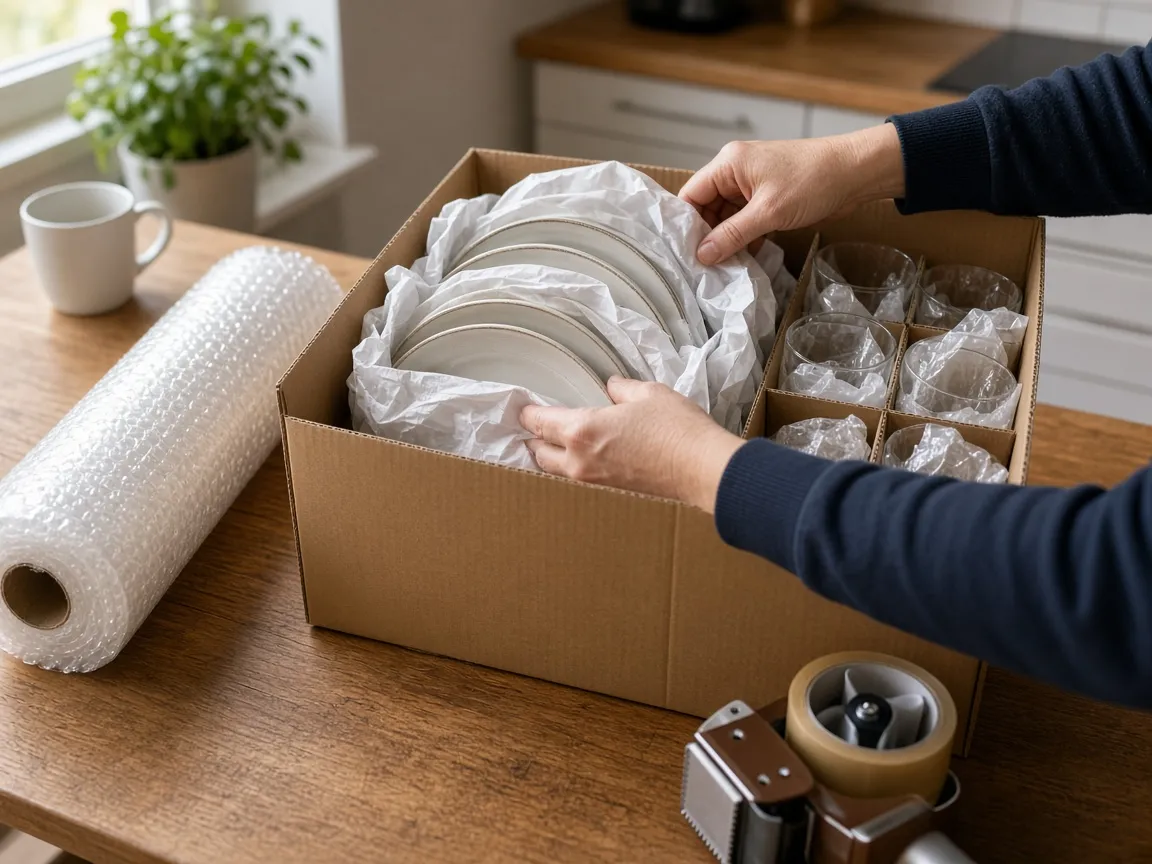
These are much lighter but still delicate. Pack a keyboard in its original box if you have kept it. Otherwise wrap it in blankets, keep it flat, and remove the stand and music rest. Unplug and coil all cables, and bag the pedals and power supply together so they do not get lost.
Bradford homes: steps, terraces and hills
Moving a piano in Bradford comes with some local quirks. Many Victorian stone terraces have a run of stone steps up to the front door. Back-to-backs often have narrow stairs with tight turns. On hilly streets in places like Queensbury, Wibsey or Idle, the path from the door to the road may slope, and parking on narrow terraced streets can mean the van stops further away than you would like.
All of this affects planning. A piano that came in through a back door or a bay window decades ago may not leave the same way it went in. Before you book, it helps to:
- Measure the doorways and narrowest points of the route.
- Take photos of any steps, slopes and stairs.
- Note where a van can stop at both ends, and whether a parking suspension might be needed.
- Tell the removal company if the piano is upstairs or in a basement.
Flats and new-builds have their own issues: lift sizes, entry systems and communal stairwells. Our piano removals page explains how we plan these jobs.
Moving other instruments
Guitars, violins and other stringed instruments
- Use a hard case if you have one. A padded gig bag is the next best thing.
- Loosen the strings a little to take tension off the neck, but do not remove them.
- Fill gaps inside the case with soft cloth so the instrument cannot move.
- Keep these with you in the car if you can, rather than on the van, so they avoid big swings in temperature.
Drums and percussion
Take cymbals off their stands and pack them in a cymbal bag or between sheets of cardboard. Remove drum heads only if you know how to refit and tune them. Nest smaller drums inside larger ones with padding between, and fold the hardware into a separate box.
Brass and woodwind
Pack these in their cases with the mouthpieces removed and wrapped separately. Reeds go in their own holder. Avoid putting heavy boxes on top of instrument cases in the van.
Amps and electronic gear
Pack amplifiers in strong boxes with plenty of padding. Valve amps should be handled extra gently. Label every cable and take photos of how things are connected before you unplug.
After the move: settling and tuning
Once the piano is in place, keep it away from radiators, fireplaces, draughty doors and direct sunlight. Bradford homes can be damp in winter, so avoid outside walls if you can.
Most tuners suggest waiting two to four weeks before booking a tuning, so the piano can get used to its new room. Tuning it sooner can mean paying for a second visit when it drifts again.
Stringed instruments also react to new surroundings. Give them a day or two before re-tuning and restringing, and check the neck and bridge after a long move.
When storage is part of the plan
Sometimes a piano has to wait between homes. If so, it needs a dry space with a steady temperature. Wrap it in breathable covers rather than tight plastic, which can trap moisture. Our guide to preparing items for storage covers the basics, and our storage service can hold it until you are ready.
Planning and booking
Piano moves go best when they are planned. Give as much notice as you can, especially for grands or tricky access. A move across town, for example from Saltaire to Thornton, can usually be done in a morning once the route is clear. Longer moves across the UK need more planning around timings and stops.
To get a price for moving your piano or a full house of instruments, fill in the free quote form or call 08000862860. Tell us the type of piano, which floor it is on and what the steps and parking are like at both ends.
Planning a move in Bradford?
Get a free, no-obligation quote, or try the cost calculator for a rough idea first.
Areas mentioned